
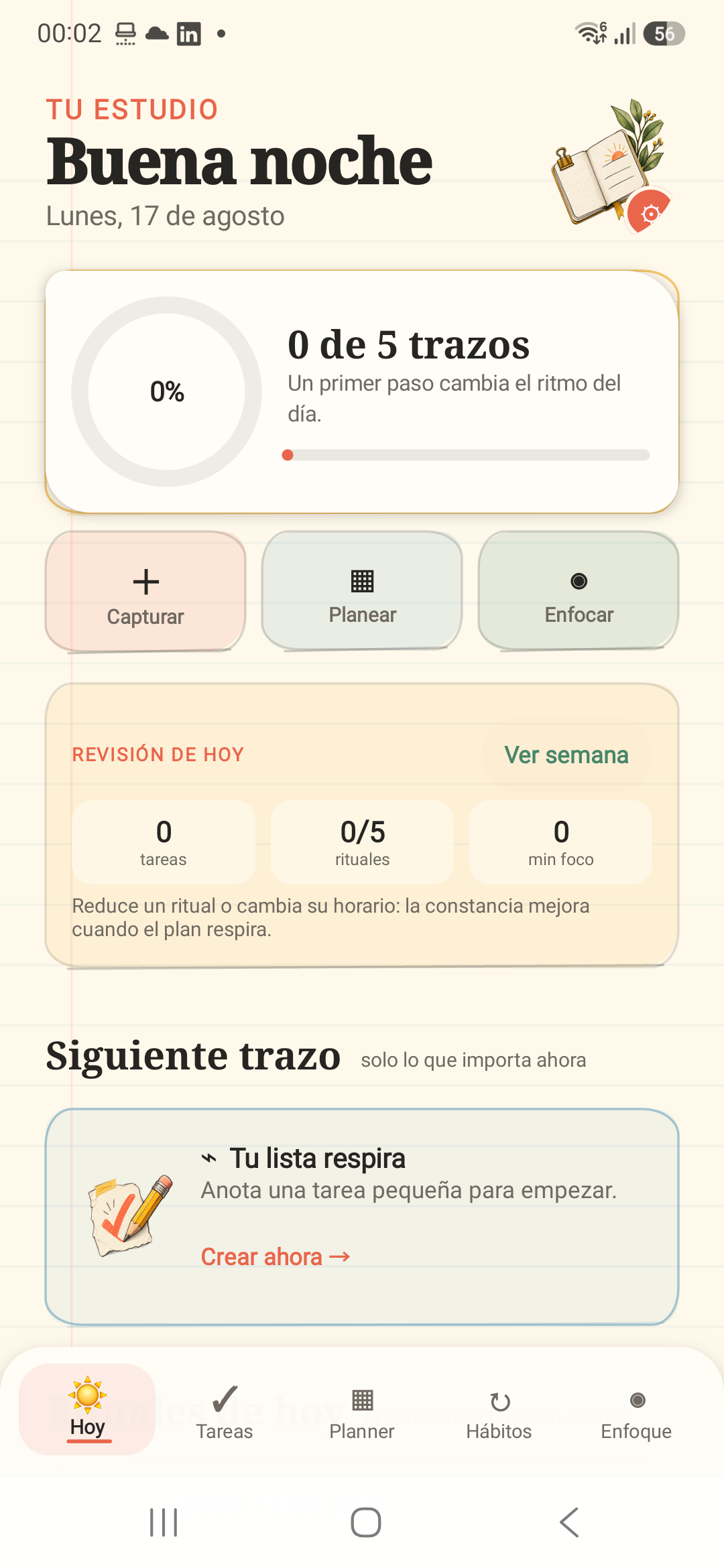
Daily view, agenda, weekly planner, and monthly calendar for actionable context.
Summary
Offline productivity with a notebook-inspired interface.
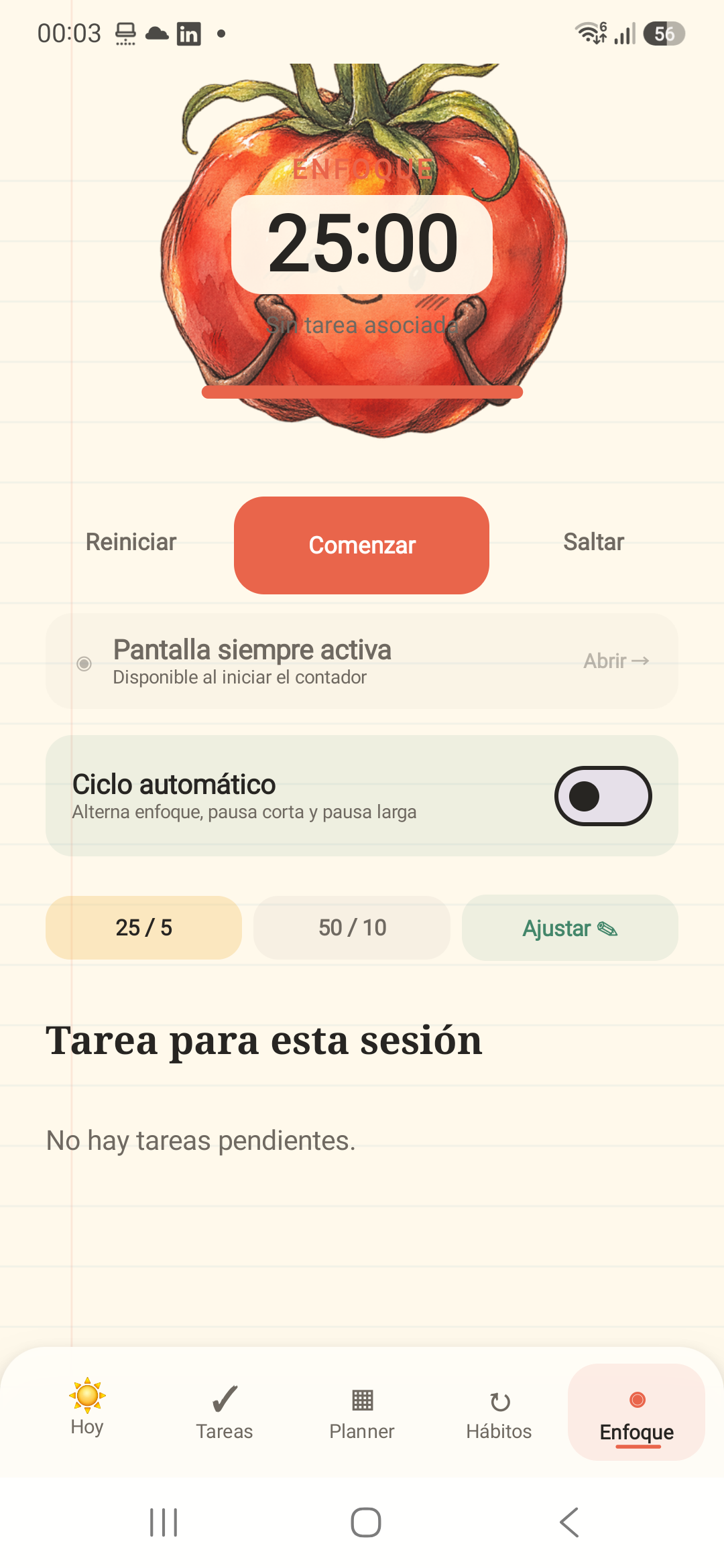
Configurable Pomodoro, alerts center, morning routine, and end-of-day schedule.
No accounts, ads, analytics, or network: tasks, habits, and backups stay on device.
Product in use
A daily studio for organizing what matters.
Problem
Personal information is fragmented, and every tool understands only one part.
Projects, tasks, habits, calendars, and money usually live apart. Rebuilding that context manually becomes a prerequisite for deciding what to do, postpone, or address.
Solution
A offline productivity app that connects facts before suggesting actions.
Trazo maintains an auditable local state and turns it into a daily plan, decision radar, daily planning, planner, focus sessions, and configurable reminders. Everything stays local without accounts.
Product decisions
Local data stays private by design.
Core principle
Determinism before generation
Priorities, finances, validation, and changes belong to the kernel. Android receives only the context it needs, and every response is filtered before reaching the user.
Context
Connect the entire system
Projects, actions, habits, events, notes, transactions, and inventory share relationships.
Operations
Confirm before writing
Proposals are edited, validated, and applied as a complete batch, with inverse operations for undo.
Privacy
Local-first by design
No account, cloud, or telemetry; JSON backups and Android restricted to local addresses.
Learning
A useful productivity app needs clarity more than noise.
Separating interpretation, calculation, and execution prevents a convincing answer from being mistaken for a fact. Trust comes from visible evidence, explicit confirmation, and reversibility.
Current scope
Version 3.4.0
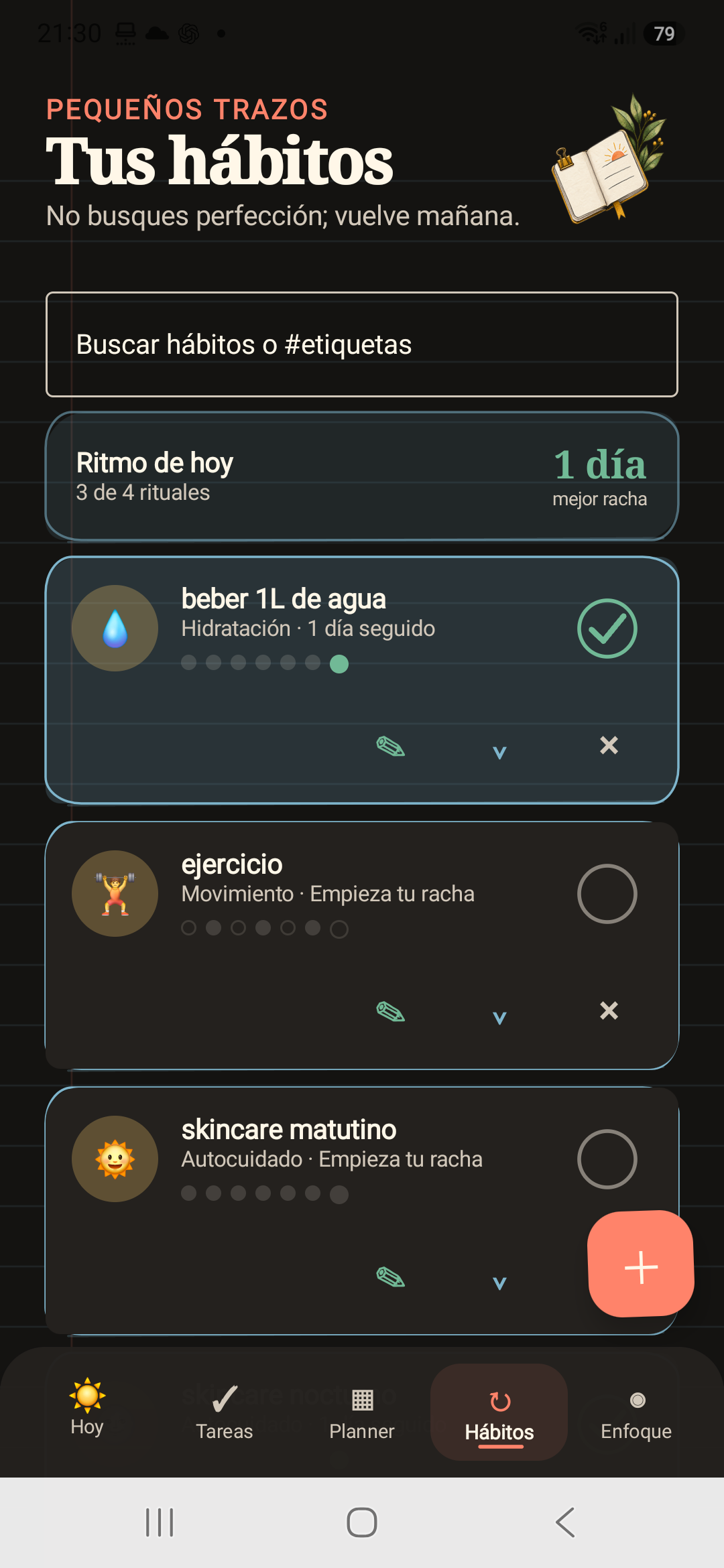
The current release includes an alerts center, morning and evening routines, measurable habits, widgets, JSON portability, and an alerts center, morning/evening routines, recoverable reminders, and unit tests for streaks.